
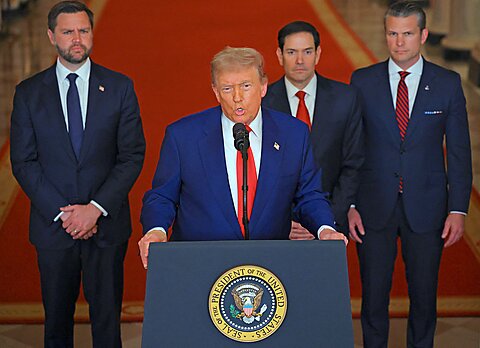

“We’re not at war with Iran. We’re at war with Iran’s nuclear program.” So characterized Vice President J.D. Vance when describing Operation Midnight Hammer last June. His remarks reflect the administration’s self-image: unlike its predecessors, it believes it can wield limited force with precision and achieve sweeping strategic success. In reality, the Trump administration’s reliance on airpower, special forces, and covert action represents not a break from the past, but a continuation—casualty-averse, yet still committed to sustaining American global primacy.
Like those before him, the president risks succumbing to the promise of easy victories and favorable optics that conceal the costs of military intervention. As Trump contemplates what may be his largest use of “limited” force yet—taking another swing at Iran’s “completely and totally obliterated” nuclear program—he would be wise to reckon with the unseen costs of second-order effects, blowback, and diplomatic fallout.
President Trump, reelected in part on the promise of “no new wars,” has instead continued and even expanded many of his predecessors’ interventions and launched several of his own. To square this circle, his administration has leaned heavily on airpower, Special Operations Forces (SOF), and covert action—cloaking them in the familiar euphemisms of modern war. While posturing as a peace president and denouncing regime change, he quietly embraced the establishment’s preferred instruments of war. Whether it was the air and naval strikes against the Houthis in Yemen, drone strikes against suspected “drug boats” in the Western Hemisphere, or a “law enforcement” operation that seized Nicholas Maduro, President Trump has never shied from using flashy but limited “kinetic military action” while claiming strategic success.
The president is now, however, running into the limits of this model as he flirts with further military action in Iran—an operation, by all accounts, that may be far larger than Operation Midnight Hammer.
The president’s reliance on airpower and covert operations is not a break in US grand strategy; it is the latest iteration of a transpartisan approach that sustains intervention while minimizing its visible costs. While President Trump has consistently presented his administration as the antithesis of President Obama’s, he has nevertheless followed his lead on the comparatively limited uses of military force while seeking outsized geopolitical returns. Recall that the understandably casualty-adverse President Obama nevertheless intervened in the Libyan Civil War. While promising “no boots on the ground,” President Obama, without explicit congressional approval, used US airpower and SOF units to effect a regime overthrow of the now-departed Libyan strongman, Muammar Gaddafi.
President Obama similarly intervened in the Syrian Civil War with covert operations that, in effect, placed the United States on both sides of that conflict. Despite modern claims to the contrary, President Obama’s foreign policy record was hardly that of a dove.
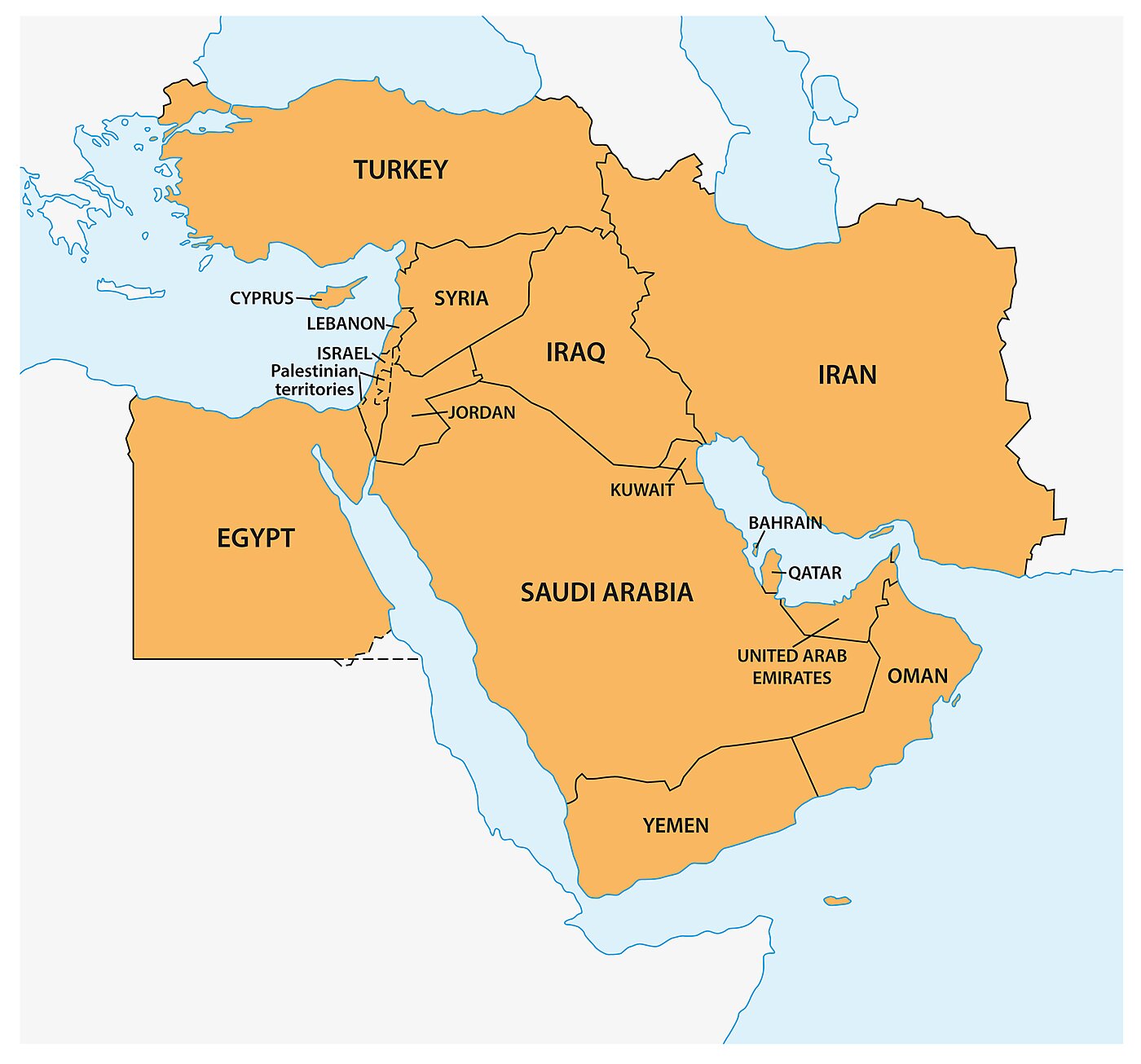
Airpower and clandestine forces may keep American bloodshed low and financial burdens diffuse, but they generate costs of their own—costs the Administration would be wise to avoid. Limited strikes, as in Libya during the Obama administration, produced second-order effects that the region still endures. US casualties were indeed minimal, yet they were not nonexistent—and they were soon eclipsed by civil war, a destabilizing refugee crisis, and the spreading of radical jihadists to a country where they were previously absent. The US then spent the next seven years waging an asymmetric war against jihadist groups that sprang up in the wake of its original intervention. Comparable interventions in Syria followed a similar pattern: American involvement became one strand in a protracted thirteen-year conflict whose strategic consequences continue to unfold, with little discernible strategic gain for the United States.
In each case, “limited” intervention did not resolve entanglements; it prolonged them. Interventions in Libya and Syria, as well as other “kinetic actions” in Yemen and Somalia, produced blowback in the form of radicalizing another generation against America, fed humanitarian and refugee crises, and strained diplomatic relationships throughout the region and further afield. The use of “limited” military force produced outsized costs that continue to unnecessarily entangle the United States throughout the Middle East.
Now, President Trump stands on the precipice of attempting to apply this supposedly limited model to the loftiest geopolitical goal yet, an open-ended air and special operations war against Iran. Whether the administration’s goals are the re-obliteration of Iran’s nuclear program, the reduction of its strategic missile forces, or the decapitation of the country’s regime, all would constitute sending the US military into war with no casus belli, no congressional consultation, and no clear and present danger to the American homeland.
In his desire to use “limited” military force, President Trump is poised to start the very open-ended sort of war he promised to avoid. The president would be wise to take the big diplomatic win still on the table by sealing a deal with Tehran and avoiding the very kind of forever war he was sent to Washington to stop.