

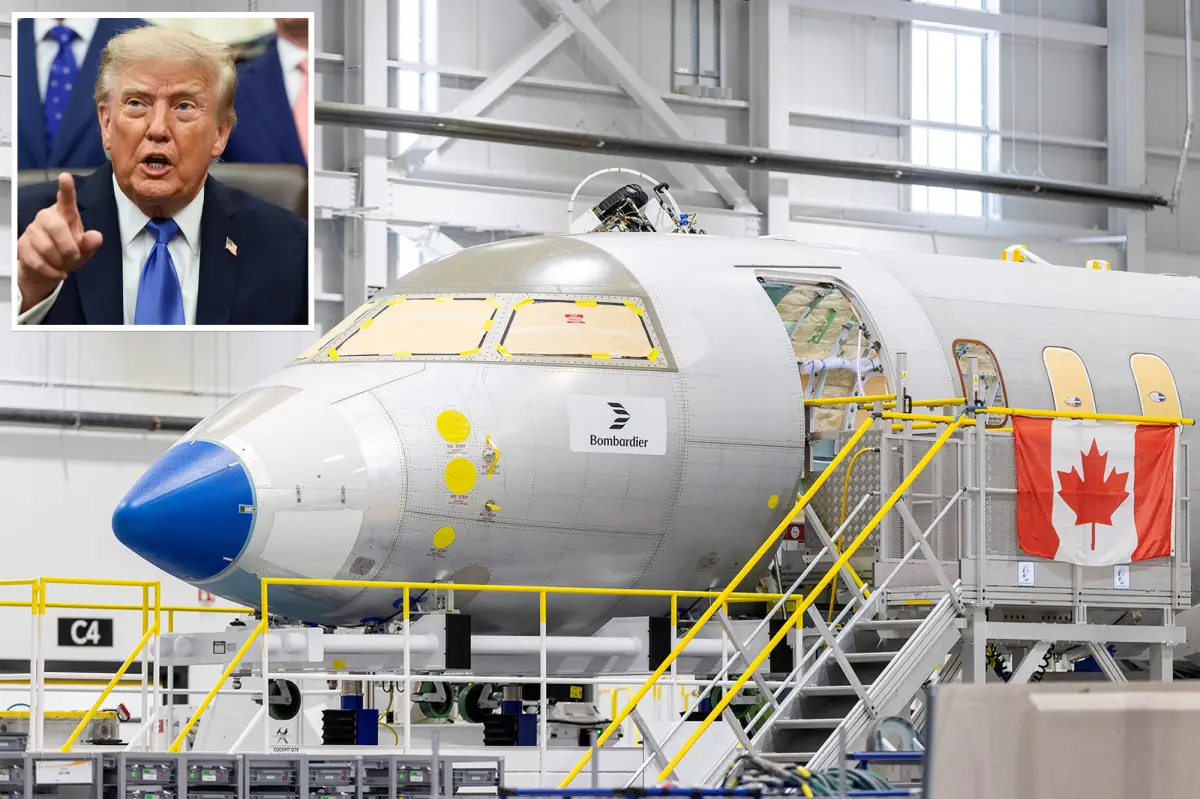
Bombardier shares took a sharp dive on Tuesday after President Trump issued a blunt ultimatum via Truth Social, threatening to ban the Canadian jet maker from the U.S. market. In a post where he accused the company of treating America like a piggy bank, the president insisted that if Bombardier wants access to U.S. buyers, it must move its manufacturing operations onto American soil. The reaction from investors was immediate, with shares opening down over six percent in Toronto before managing to recover some ground throughout the trading session.
The threat comes at a volatile time for North American trade relations, arriving just as Canada slapped retaliatory tariffs on billions of dollars worth of U.S. goods following a breakdown in trade negotiations last month. While the rhetoric suggests a total shutdown, any actual blockade would likely create significant ripples within the United States itself. Bombardier already maintains a massive domestic footprint, employing roughly 3,500 Americans and spending more than 2.5 billion dollars annually with U.S.-based suppliers across several states.
Local lawmakers in key aerospace hubs are already pushing back against the president’s stance, citing the risk to thousands of jobs and critical defense partnerships. Senator Jerry Moran and Representative Ron Estes have highlighted Bombardier’s essential role in Kansas and Texas, noting that the company is deeply integrated into the U.S. military infrastructure through high value contracts with the Air Force for specialized communication platforms. They argue that punishing the firm could jeopardize national security missions and damage an extensive local supply chain.
For its part, Bombardier has attempted to play a diplomatic hand by emphasizing its commitment to growth within the U.S., pointing to recent expansions such as a new component plant in California and maintenance facilities in Delaware. The company stated it intends to continue investing in its American workforce and communities despite the political pressure. As the trade war between Washington and Ottawa escalates, all eyes remain on whether these existing economic ties will be enough to shield the jet maker from further presidential ire.