

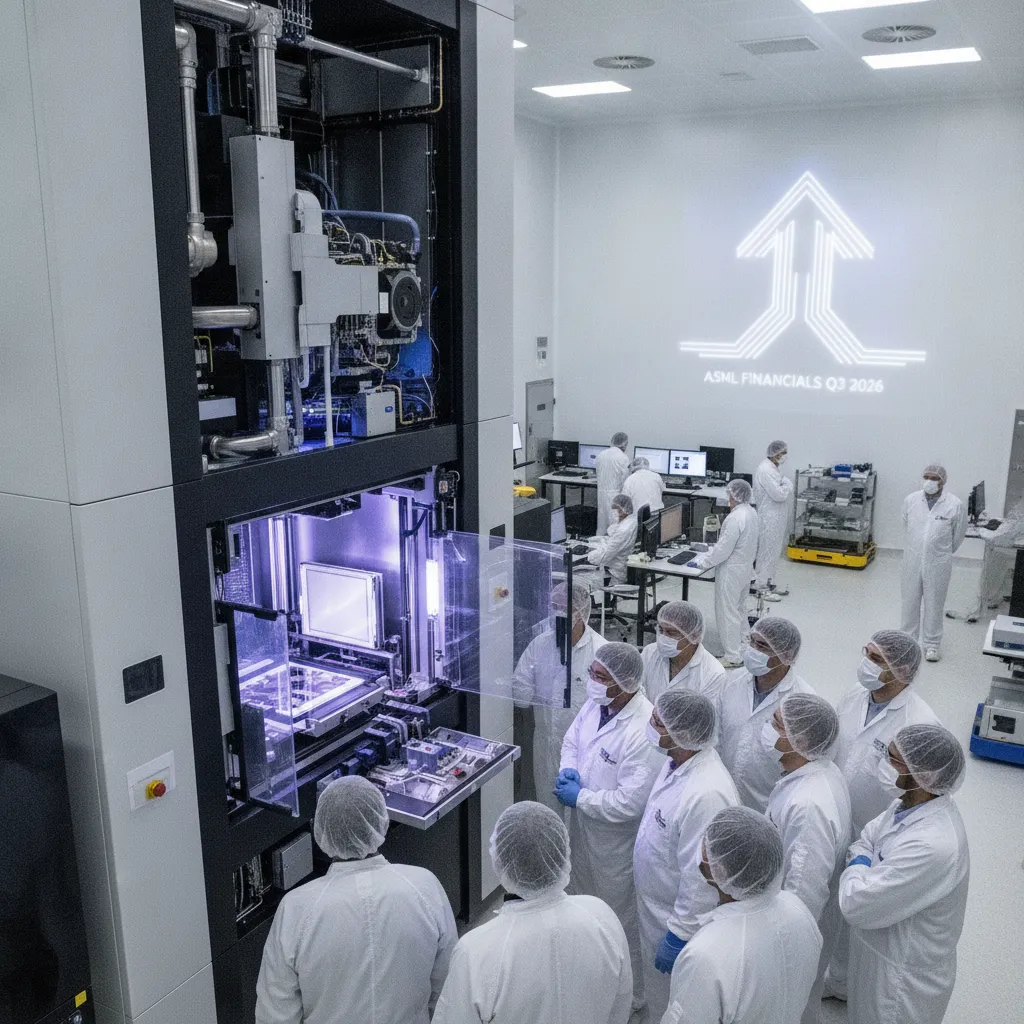
The global semiconductor landscape just received a significant shot of confidence thanks to the latest financial disclosures from ASML. As the sole provider of the extreme ultraviolet lithography machines required to print the world’s most advanced chips, the Dutch firm occupies a unique position in the supply chain. In its third quarter results for 2026, ASML revealed an impressive surge in revenue and earnings, reporting that it sold 113 new systems compared to just 66 during the same period last year. More importantly, leadership indicated that they are currently struggling to keep pace with overwhelming customer demand.
Chief Executive Officer Christophe Fouquet provided a bullish outlook during a recent earnings call, noting that major clients are seeing long term commitments that suggest demand for AI hardware will outstrip supply until at least 2028. This trend is so pronounced that some customers are already attempting to secure orders for 2029 and 2030. To accommodate this trajectory, ASML plans to expand its production capacity beyond its initial targets. For investors, this serves as a powerful signal that the infrastructure build out for artificial intelligence is nowhere near its peak.
This forecast provides a strong tailwind for industry heavyweights like Nvidia and Micron Technology. Because these companies rely on the machinery produced by ASML to create their high end GPUs and memory modules, the persistent shortage of supply creates a favorable pricing environment that supports aggressive growth. Despite this optimistic backdrop, both stocks recently experienced pullbacks driven by broader worries over interest rates and financing costs. However, analysts suggest these dips may provide an attractive entry point given the projected earnings trajectories for both firms.
Nvidia continues to see explosive potential, with expectations of doubling chip sales next year and maintaining massive revenue growth into fiscal 2028 within a constrained supply market. Similarly, Micron stands to benefit from widening gaps between logic and memory node availability, following a fiscal year where revenues soared over two hundred percent. With forward earnings multiples remaining competitive relative to the wider Nasdaq index, the latest updates from ASML suggest that any short term volatility in these stocks may be overshadowed by a multi year cycle of expansion.