

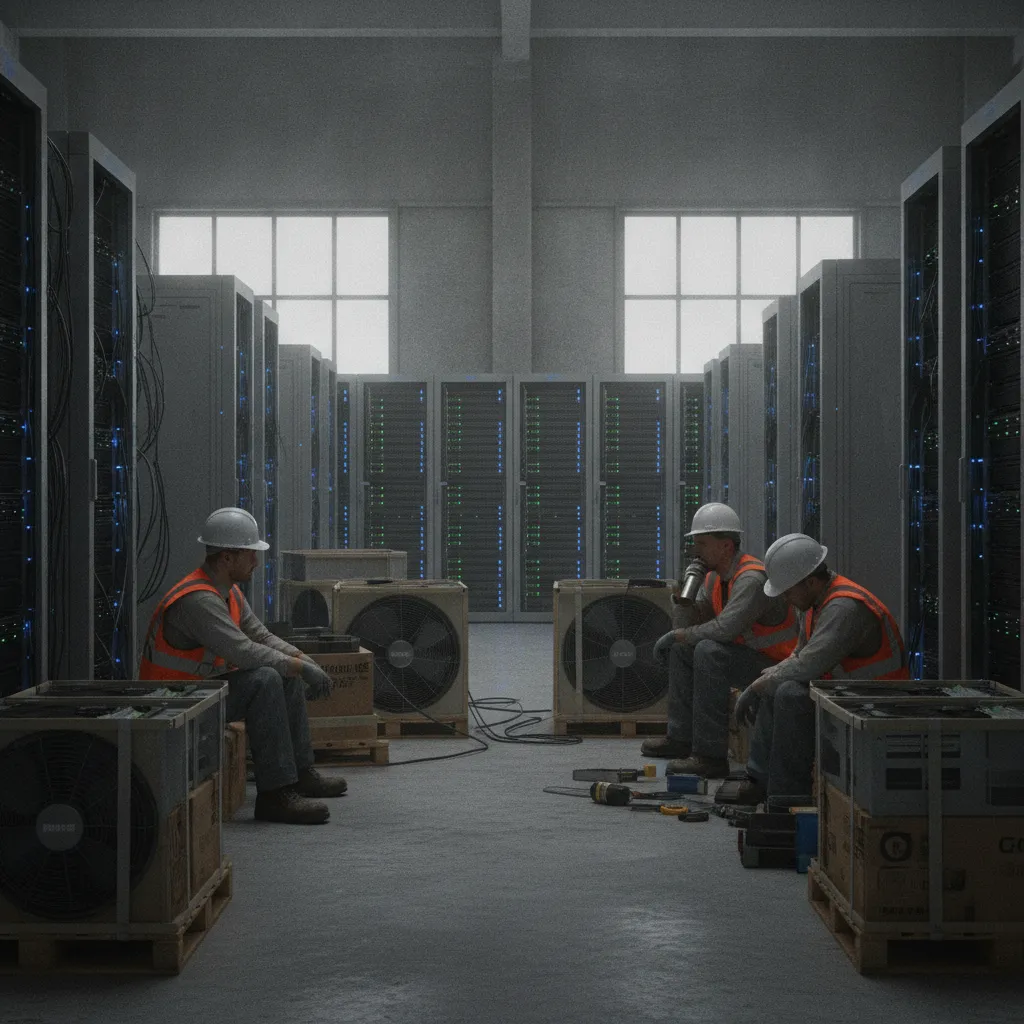
Investors who have weathered recent volatility may find that the worst is yet to come. According to a sobering analysis from Capital Economics, the massive surge in artificial intelligence investment is heading toward a plateau, potentially triggering a significant slide in stock markets through 2027. While the technology holds genuine promise for long term productivity, Chief Economic Adviser Vicky Redwood warns that the sheer volume of money being poured into hardware and infrastructure may soon outpace the actual revenue these systems can generate.
The numbers behind the boom are staggering, with hyperscalers projected to spend upwards of one trillion dollars annually by 2027. To justify this expenditure, AI revenues would need to grow tenfold by 2030, a scenario that would require an economic upheaval far more radical and disruptive than what we are seeing today. Consequently, Redwood predicts that while investment will continue to climb next year, the pace will slow before dropping entirely by roughly ten percent in 2028. This shift is expected to hit tech heavy indices particularly hard, with projections suggesting the S&P 500 could sit twelve percent below current levels by late 2027.
This cooling period won’t just affect portfolios; it will ripple through global GDP figures as well. In the United States, a dip in capital expenditure could shave small fractions off growth rates, though the impact will be felt much more acutely in AI dependent hubs like Taiwan and South Korea. Furthermore, as stock prices decline, a negative wealth effect is likely to dampen consumer spending, adding another layer of pressure on overall economic momentum.
Despite these grim forecasts for investors, the outlook for the technology itself remains optimistic. The infrastructure currently being built will likely serve as a foundation for steady productivity gains of about one percent per year in the U.S. Rather than a catastrophic crash reminiscent of the dot com era, experts suggest we are moving toward a more sustainable pace of growth where AI becomes integrated into the economy without relying on infinite spending loops.