

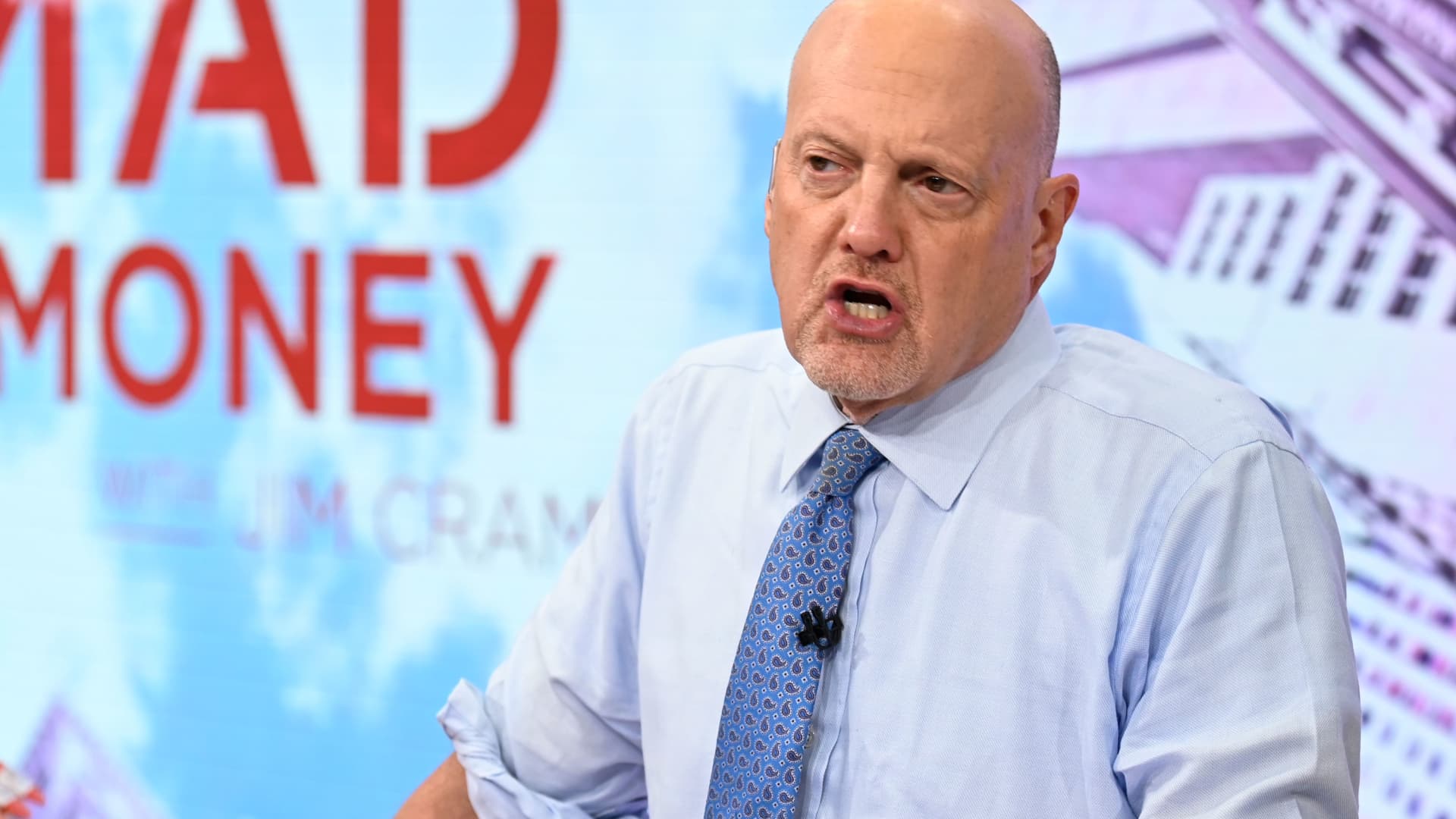
Jim Cramer believes there is currently a profound disconnect between the actual performance of many American companies and how they are being valued on Wall Street. Speaking from the construction site of Micron’s massive new semiconductor facility in Boise, Idaho, the Mad Money host warned that an incredibly jarring gulf has opened up between stock prices and reality. Despite seeing firsthand the raw industrial power of projects fueling the artificial intelligence boom, Cramer noted that broad economic anxieties are preventing investors from rewarding businesses that remain fundamentally strong.
The tension comes at a time when markets are reeling from rising bond yields and stubborn inflationary fears, partly driven by geopolitical instability and fluctuating oil prices. This volatility was evident during a recent trading session where major indices including the Dow, S&P 500, and Nasdaq all dipped. Even heavyweights like Walmart felt the pressure, with its stock sliding after missing certain sales expectations. However, Cramer argued that these numbers often mask a deeper story, suggesting that high gas prices are squeezing consumers and forcing retailers to prioritize long term market share over immediate profit margins.
Adding to the uncertainty is the federal government’s struggle to manage soaring interest rates amidst a mountain of national debt. When discussing Treasury Secretary Scott Bessent’s plans to purchase longer dated government debt to stabilize rates, Cramer expressed skepticism about whether such measures could truly move the needle. He compared the effort to a small child trying to plug a leaking dike with his finger, noting that a few billion dollars in buybacks pale in comparison to forty trillion dollars in total national debt.
Ultimately, Cramer cautioned that individual corporate success cannot exist in a vacuum because every stock must be viewed through the prism of the overall market. While he cited Micron as a prime example of American exceptionalism due to its strategic investments and resilience, he admitted that most other companies in the S&P 500 aren’t faring as well. Because two thirds of the U.S. economy relies on services rather than manufacturing, he believes investor sentiment will remain fragile until there is more clarity regarding the health of the average consumer.