

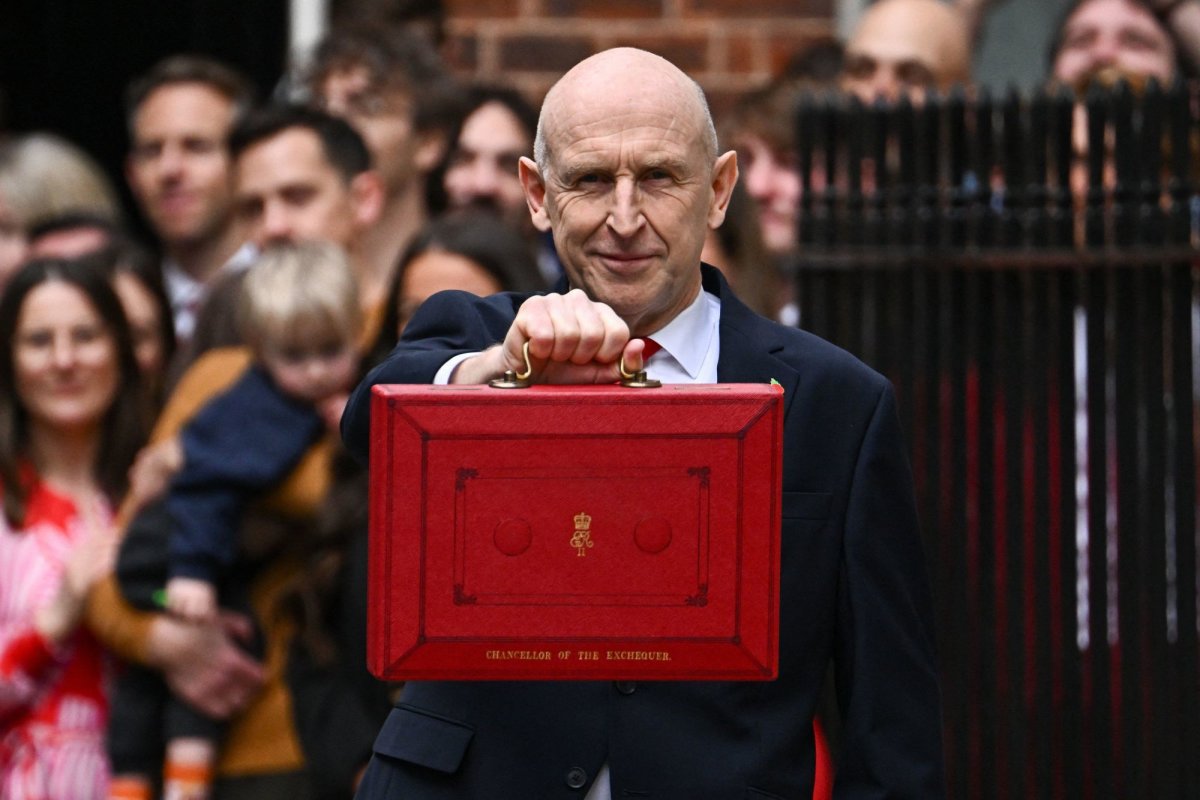
Chancellor John Healey delivered his first Budget on Wednesday (Alamy)

5 min read1 hr
Chancellor John Healey has said the Andy Burnham government’s first Budget will give people “breathing space” as he set out more measures to address cost-of-living pressures.
Speaking in the House of Commons on Wednesday, Healey said the government would help “the working people of Britain” amid “global economic storms” like the ongoing conflict in Iran and its impact on energy prices.
One of the most significant announcements was a £100 ‘Household Energy Payment’, which will be paid directly to 20m households in council tax bands A-D. The scheme will cost £2.6bn.
Healey said the government would also extend the electricity VAT cut for 29m households to July next year, taking £50 off the annual price cap.
He also confirmed that the removal of standing charges from energy bills, announced by the Treasury earlier in the day, will come into effect from next year.
The Burnham government has made energy bills a central focus since entering office in July, with the Energy Secretary recently telling reporters that Labour will “win or lose the next election on our ability to make progress on the cost of living”.
Elsewhere, Healey confirmed on Wednesday that the 5p cut to Fuel Duty announced earlier this year would be extended to July for motorists, and that the government would remove the “cliff edge” on earnings for carers, “so that people don’t lose their entire Carers Allowance when they earn a penny over the threshold”.
The National Minimum Wage and the National Living Wage will also increase by 3.9 per cent.
The Chancellor announced a new First Time Buyer ISA to replace the Lifetime ISA, as well as a new equity loan scheme for first-time buyers who “don’t have the bank of mum and dad behind them”, backed by £4.7bn of government-backed lending.
He revealed that the government will not go ahead with cutting the tax-free amount that people can put into a cash ISA, with the threshold remaining at £20,000 annually, reversing a step taken by his predecessor Rachel Reeves.
Healey confirmed a £600m package to protect the UK from AI risks and “Good Growth Funds” for mayors to invest in local economies, with a further £1.5bn of devolved loans for Mayoral Authorities.
“For the first time, I’m making the commitment that 100 per cent of business rates will be retained locally by the end of the decade.
“So if local leaders help businesses start and grow, more of the rates they pay stay in that area. From next year, 20 per cent of business rates revenue will go to mayors. And from 2028, a share of income tax receipts will go to Mayors as well,” he said.
The government will also commit an additional £1.5bn for the Social and Affordable Housing Programme, taking total government spending on council housing to £40bn.
“To get more council homes built, I am extending cheaper borrowing for councils, and making all land sold to social housing providers VAT-free,” Healey said.
“The Conservatives sold off our council housing. We are building it back.”
He also confirmed that the government will transfer what remains of the Mineworkers’ Pension Scheme to former pit workers. This follows backlash from Labour MPs in mining seats who told PoliticsHome on Tuesday night that ministers had been planning to renege on that pledge.
“I know the job’s not finished and I will go on to ensure the full transfer of the Guarantors Fund,” Healey told MPs.
The Chancellor repeatedly stressed that “global economic storms” were making it a difficult time for government, including the wars in Ukraine and the Middle East, with shipping still closed through the Strait of Hormuz, causing high borrowing costs for all the countries in the G7.
The Office for Budget Responsibility (OBR) added to the gloomy backdrop, estimating today that real disposable income would be just 1 per cent higher per person by 2029-30 than pre-pandemic levels.
This Budget was Healey’s first fiscal event as Chancellor, having been appointed by Prime Minister Burnham in the summer. The government has reportedly held frequent talks with Money Saving Expert’s Martin Lewis, who has helped ministers navigate which measures would help to ease cost-of-living pressures.
The OBR has cut its forecast for GDP growth next year to one per cent, down from its previous forecast of 1.6 per cent. The economic growth outlook for this year has increased from 1.1 per cent to 1.2 per cent.
The OBR predicts that the UK will spend £14bn more on debt interest this year.
Referring to the Treasury’s fiscal headroom, Healey said: “Use it when you need it. Rebuild it when you can.”
The headroom has been reduced to £15bn during 2029-30, down from £23.6bn during March’s forecast.
The government is waiting for the Alan Milburn and Stephen Timms reports before bringing forward any welfare reforms, which could prove to be controversial with Labour MPs after a large rebellion earlier this year when the Labour government attempted to introduce welfare reforms under Keir Starmer’s premiership.
The UK government will set out its path to reaching the NATO commitment of 3.5 per cent of GDP on defence spending by 2035 in the Spending Review next year.
Healey said he will also set out plans to reach 3 per cent of GDP on defence spending by 2030 at that point, and announced the launch of the new Innovative Defence Finance Taskforce to lead this work.
Conservative leader Kemi Badenoch said the Budget was “not good enough, not strong enough, not bold enough”
She said the UK remains “overspent, overborrowed, overtaxed and drowning in an out-of-control welfare system”.
The opposition leader said the Tories would cut government spending by £70bn if they were in power, including £36bn from welfare.
“We would use half of that money to cut the deficit, so Britain doesn’t go bankrupt, and borrowing rates start to calm down,” she said.